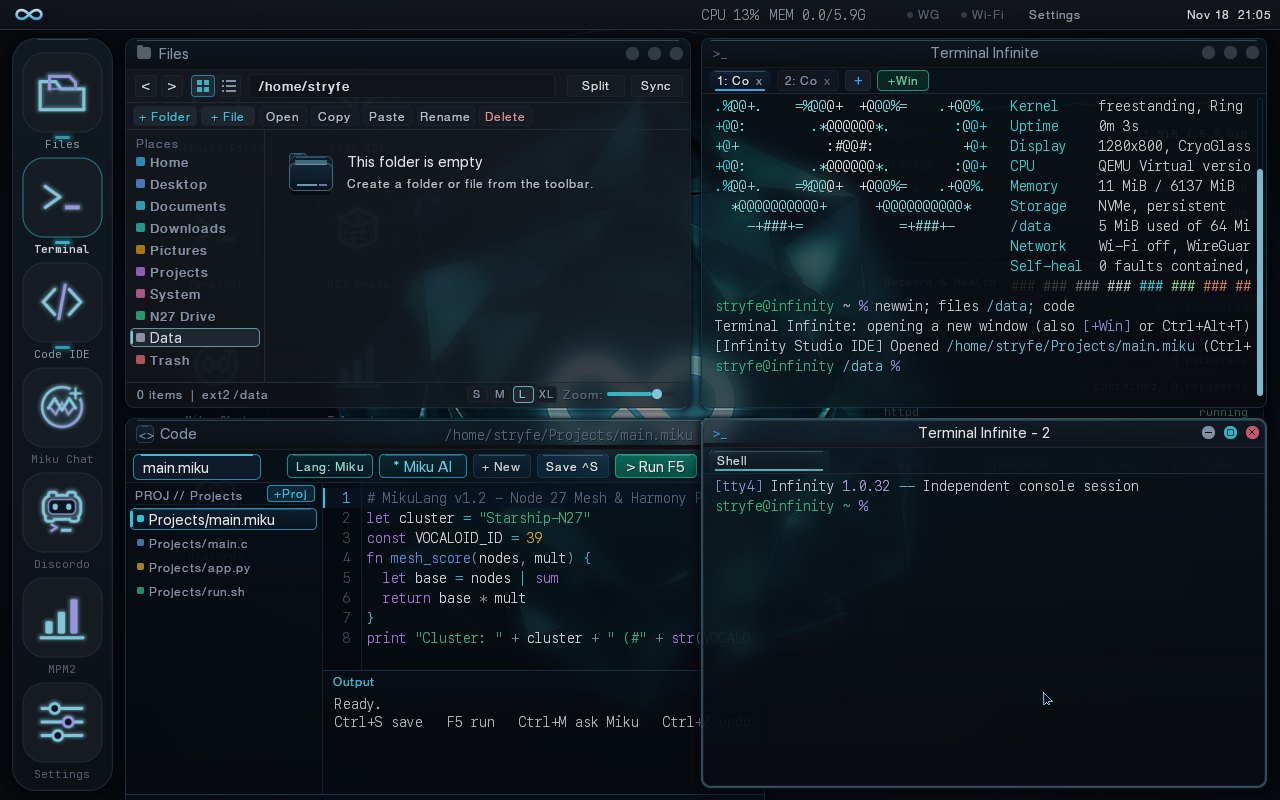
Windows that tile themselves
One click lays every open window into a clean grid: terminals, files, code, apps.
An operating system written from nothing: its own kernel, desktop, drivers and apps. No Linux underneath. It boots a real laptop and gets better every day.
CryoGlass is the desktop: real numbers, quiet colour, nothing borrowed. Every pixel below is drawn by Infinity's own compositor.
One click lays every open window into a clean grid: terminals, files, code, apps.
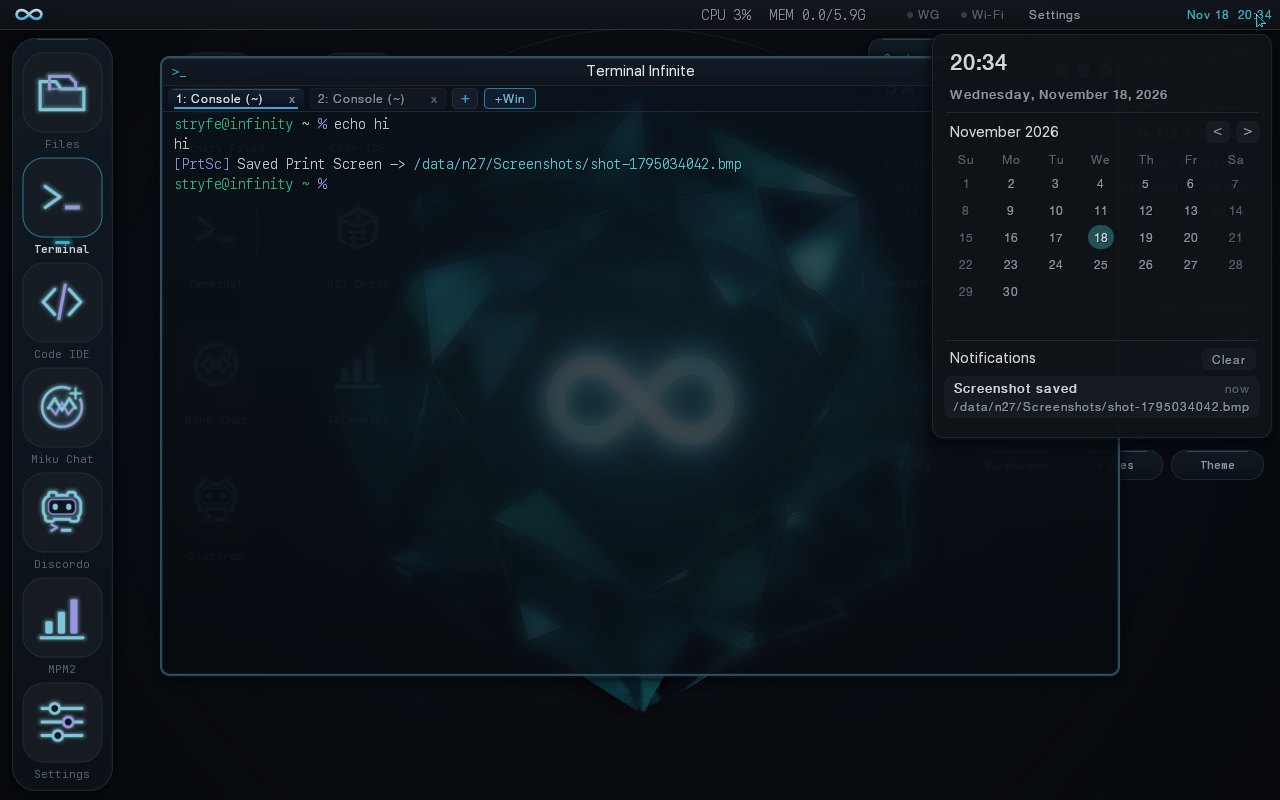
A glance at the clock shows the month and everything that happened.
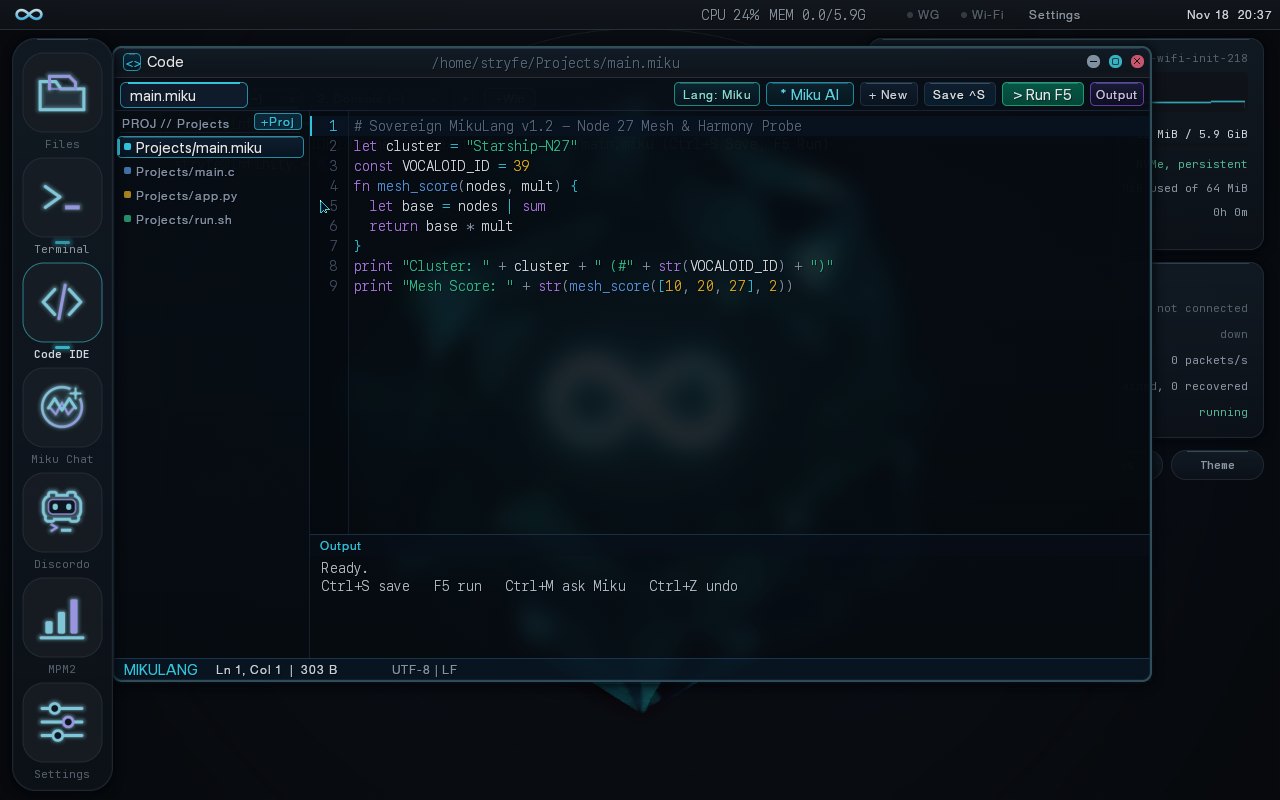
A built-in editor for your projects, with run on F5.
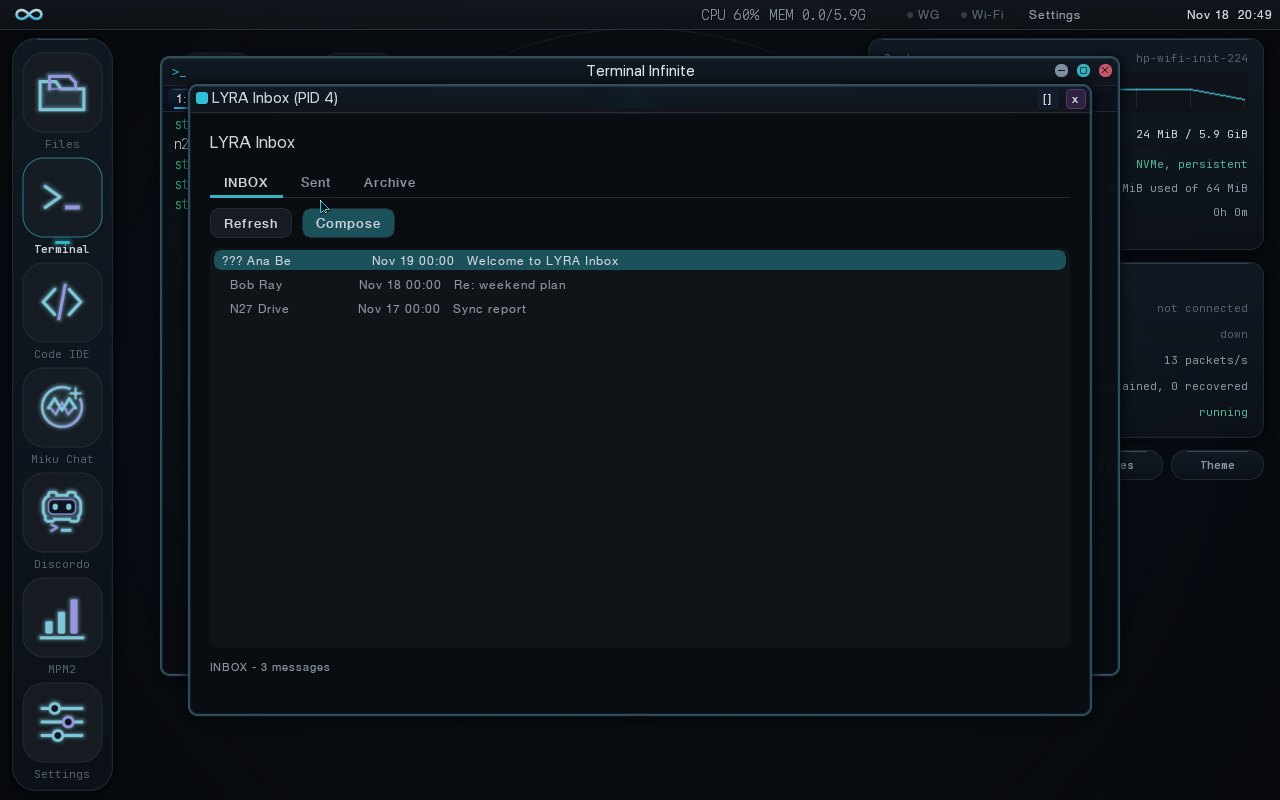
A native mail app, built on Infinity's own Rust GUI toolkit.
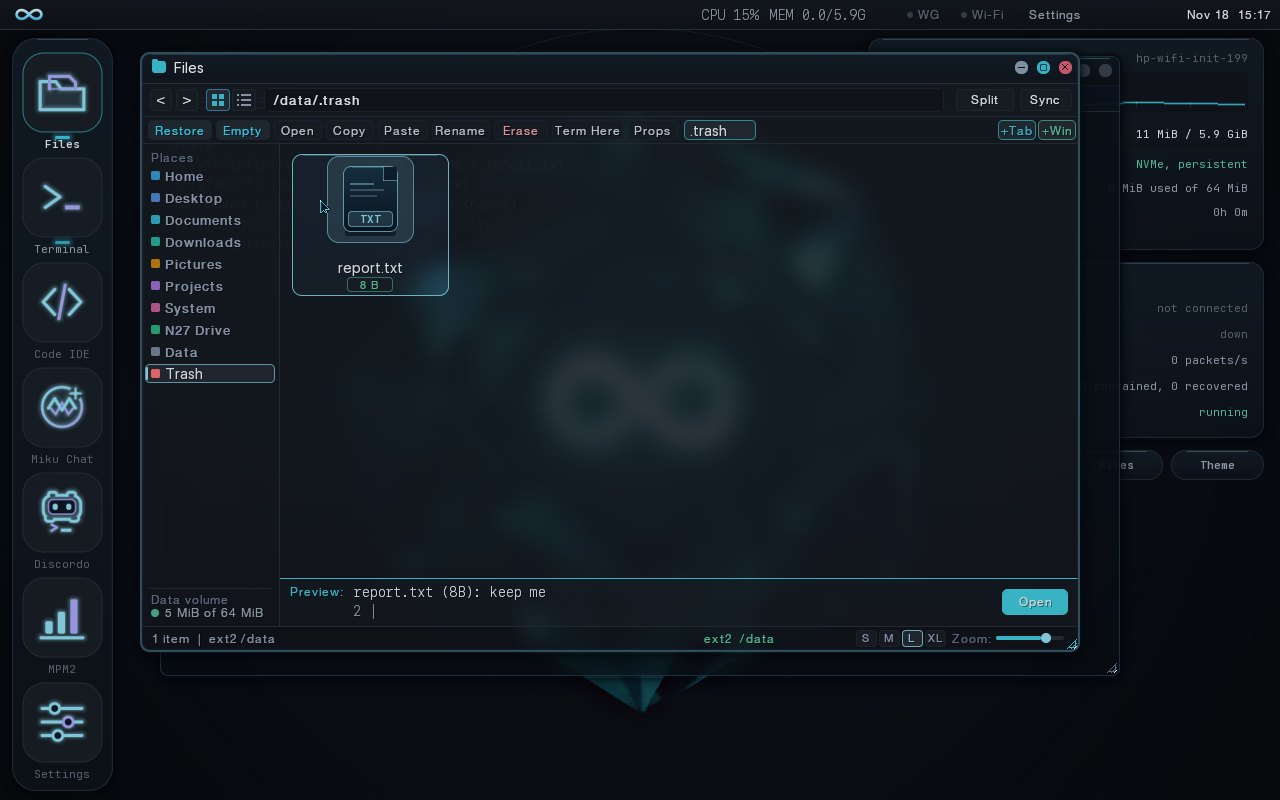
Delete safely, restore anything, sync a folder to your own drive.
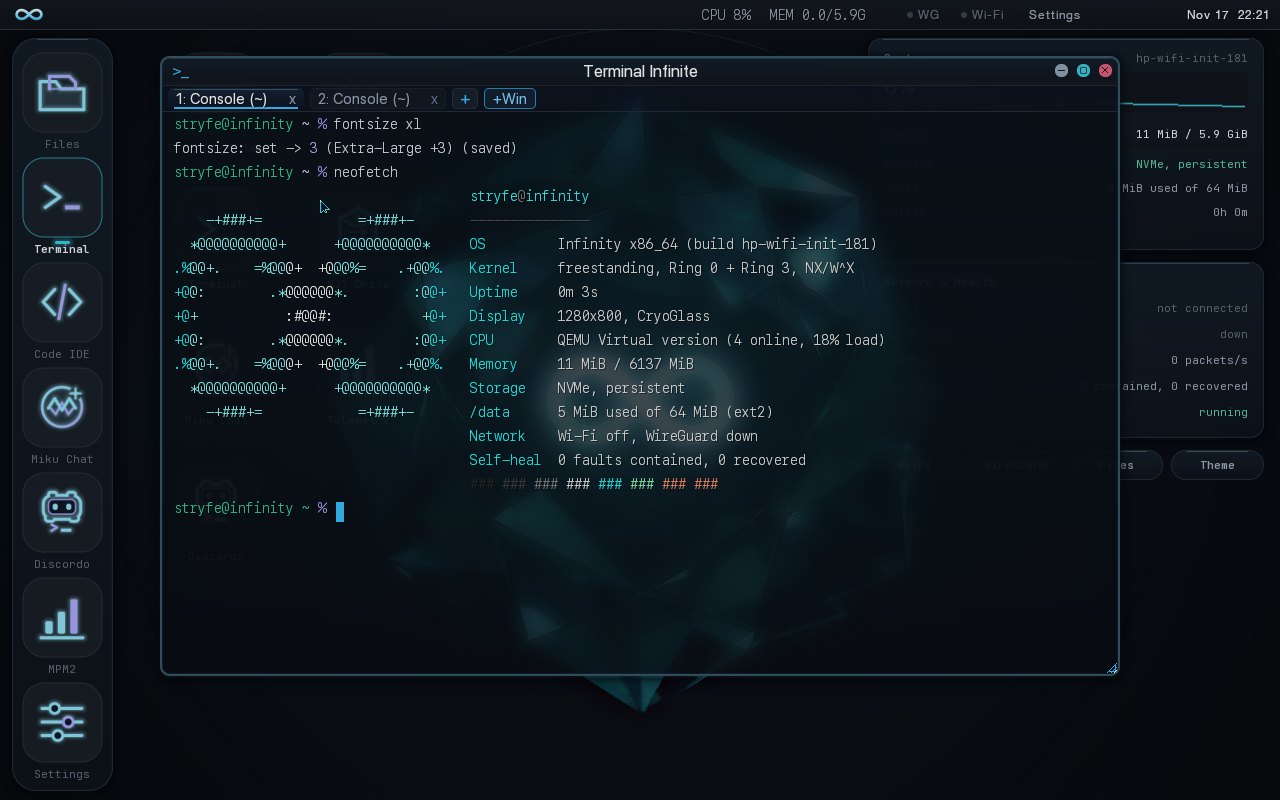
Tabs, many windows, a real shell, SSH, and art that stays aligned at every font size.
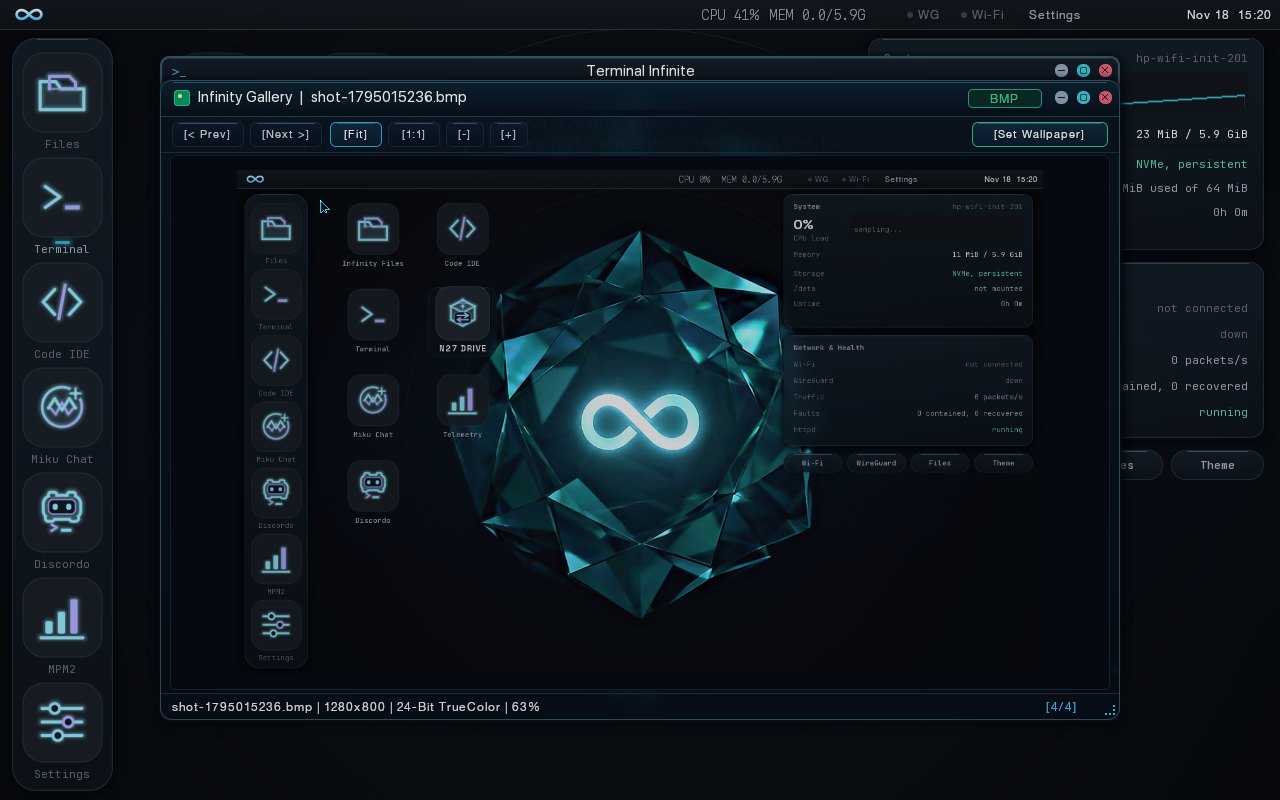
Print Screen saves full resolution, opens in the viewer, and syncs to your drive.
From the first instruction after the firmware to the last pixel on screen, it's Infinity's own code.
A UEFI loader brings up the x86-64 kernel directly. No GRUB in the path, no Linux.
Ring 0 / Ring 3 split, W^X memory, every core of a Ryzen 7 5700U working.
Written for the laptop's Realtek RTL8852AE, so it's online without borrowed code.
New builds stream in the background, verify by SHA-256, and keep the last one to roll back to.
A persistent ext2 data volume on NVMe, with Trash, restore and sync to N27 Drive.
Damage-tracked, anti-aliased, CryoGlass-themed. Smooth on integrated AMD graphics.
The Infinity SDK ships a Rust standard library, a native GUI toolkit and a one-line build. Push an app from your Mac and run it on the laptop by name.
use infinity_rt as _;

fn main() {
    let mut name = String::new();
    infinity_ui::run("Hello", 560, 400, |ui| {
        ui.heading("Hello, Infinity");
        ui.text_input(&mut name, "Your name", 300);
        if ui.button_primary("Save") {
            std::fs::write("/data/name.txt", &name).ok();
        }
        true  // keep running
    });
}
Coming soon.